Ex-Diplomat: Maduro's Removal Would Alarm North Korea
# Ex-Diplomat: Maduro's Removal Would Alarm North Korea
**Published:** 1/28/2026
**Category:** politics
---
SEOUL — The prospect of a U.S.-led removal of Venezuelan President Nicolás Maduro has long been dismissed by Pyongyang as imperialist rhetoric, but according to a high-ranking former North Korean diplomat, such a scenario represents a "nightmare" realization for Kim Jong Un, fundamentally altering the regime's security calculus.
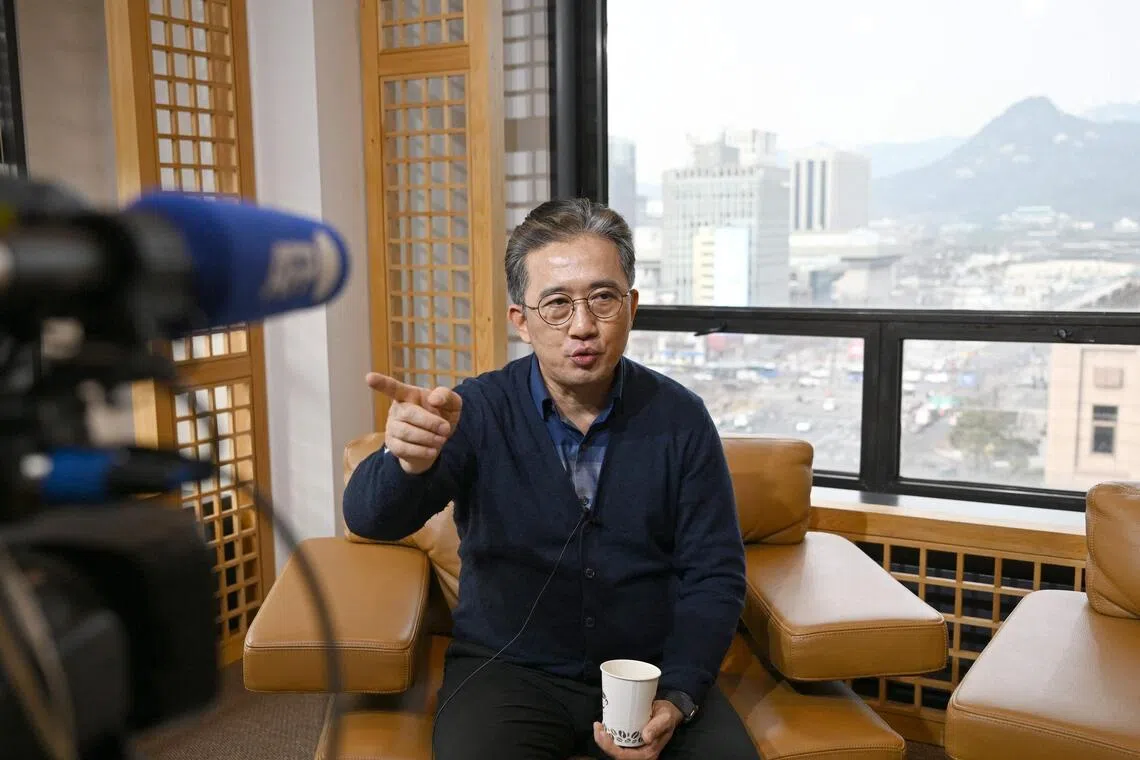
Ri Il-gyu, a former counselor at the North Korean Embassy in Cuba who defected to South Korea, has offered a stark analysis of how the leadership in Pyongyang perceives the vulnerability of fellow anti-American authoritarian regimes. His insights paint a picture of a North Korean leadership that views the potential or realized ouster of Maduro not merely as a loss of a distant ally, but as a terrifying precendent for a "decapitation" strategy that could one day target the Kim dynasty itself.
The Diplomat’s Warning
Ri Il-gyu’s assessment suggests that for Kim Jong Un, the survival of Nicolás Maduro has been a bellwether for the efficacy of anti-U.S. solidarity. According to Ri, who handled North Korean affairs in Latin America from Havana, Kim likely feels "extreme fear" at the notion of a successful U.S. intervention in Venezuela.
"The removal of Maduro is the worst-case scenario for Kim Jong Un," Ri stated in a recent analysis. "It confirms his deepest suspicion: that without a nuclear deterrent capable of striking the U.S. mainland, no authoritarian leader is safe from Washington’s reach."
Ri argues that Pyongyang interprets such interventions as a direct signal that the United States has not abandoned its policy of regime change, despite diplomatic overtures. The ex-diplomat emphasized that Kim would view a U.S. operation in Caracas as a "rehearsal" for a similar strike on Pyongyang, validating his regime’s paranoia and likely triggering an aggressive recalibration of his defense posture.
Background: A Brotherhood of Paranoia
North Korea and Venezuela have shared a deepening diplomatic relationship, cemented not by trade volume, but by a shared ideological hostility toward the United States. Since the era of Hugo Chávez, Pyongyang has viewed Venezuela as a critical outpost of anti-imperialism in the Western Hemisphere. Under Maduro, this relationship expanded, with North Korea expressing vocal support for his government during previous internal crises and U.S. sanctions.
For North Korea, the "brotherhood" is strategic. The survival of other pariah states provides a layer of geopolitical insulation. If Maduro can withstand U.S. pressure, it validates Kim’s own resilience. Conversely, if Maduro falls, the circle of "anti-imperialist" survivors shrinks, leaving North Korea more isolated.
Historically, the Kim family has obsessively studied the downfalls of other dictators. The deaths of Saddam Hussein in Iraq and Muammar Gaddafi in Libya are frequently cited in North Korean state media as cautionary tales of leaders who surrendered their weapons of mass destruction or failed to sufficiently deter U.S. aggression. Ri Il-gyu notes that Maduro’s case is scrutinized through this same lens, but with added urgency given Venezuela’s proximity to the U.S. and the specific nature of the threat (internal collapse aided by external pressure).
The Threat Perception: Why Maduro Matters to Kim
According to Ri, the specific mechanism of a hypothetical Maduro ouster—U.S. support for opposition forces combined with targeted pressure or military extraction—strikes at the heart of Kim’s internal control model.
"Kim Jong Un knows that his system is brittle," Ri explained. "He fears that if the U.S. can successfully decapitate the Venezuelan leadership without a full-scale ground invasion, they might attempt a similar 'surgical' removal in North Korea."
The analysis highlights that Kim’s leadership style relies heavily on the projection of invincibility. A successful U.S. intervention against a fellow "strongman" pierces that veil. It demonstrates to North Korean elites—who are quietly watching global events—that U.S. power remains formidable and that loyalty to a dictator does not guarantee survival. This fear of "elite defection" is likely why Kim would view the event as an existential threat.
Implications: Fortress Pyongyang
The implications of this threat perception are far-reaching, likely cementing a hardline shift in North Korea’s foreign and domestic policy.
Foreign Policy and Nuclear Doctrine: Ri predicts that a Maduro ouster would serve as the "final nail in the coffin" for any denuclearization talks. "Kim will conclude that nuclear weapons are the only guarantee of life," Ri asserted. The regime would likely accelerate its development of ICBMs and tactical nuclear weapons, viewing them not just as bargaining chips, but as essential tools to prevent a Venezuela-style intervention. The narrative in Pyongyang would shift to: "Venezuela fell because they had oil but no nukes; we will not make that mistake."
Internal Control and Surveillance: Domestically, the impact would be felt in a severe tightening of the grip on society. Fearing that the "contagion" of regime change could inspire his own people or military, Kim would likely intensify purges of officials perceived as wavering. Ri Il-gyu anticipates an "overhaul" of Kim’s personal security protocols, with increased paranoia regarding his movements and potential U.S. intelligence penetration.
Furthermore, the regime would likely launch a massive propaganda campaign to spin the narrative, portraying the events in Venezuela as a "criminal act" by the U.S. to stoke anti-American anger, while simultaneously blocking any details that might suggest the Venezuelan people themselves welcomed the change.
Conclusion
The insights provided by ex-diplomat Ri Il-gyu offer a chilling glimpse into the psyche of the North Korean leadership. A U.S.-led removal of Nicolás Maduro is not merely a headline from South America for Kim Jong Un; it is a terrifying prophecy.
As Washington weighs its options in the Western Hemisphere, the reverberations are being felt in East Asia. The primary casualty of such a geopolitical shift may well be the faint hope of diplomatic engagement with North Korea, replaced by a regime more convinced than ever that its survival depends entirely on the size of its nuclear arsenal and the absolute suppression of its people.
---
---
According to a former North Korean diplomat, the removal of Venezuelan President Nicolas Maduro by the US would trigger significant anxiety among North Korea's leadership. The ex-diplomat believes North Korean officials, already highly concerned with security, would interpret such an action as a direct threat to their own regime's stability and survival. This assessment highlights the interconnectedness of global geopolitics and the potential for events in one region to have repercussions on the strategic thinking of leaders in seemingly unrelated nations.
---
*This article was automatically generated and curated by our AI news platform.*